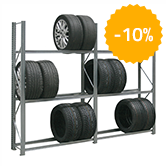
Warehouse racks
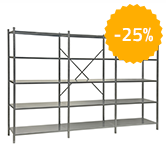
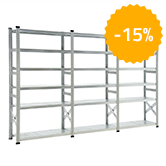
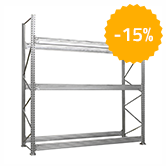
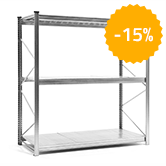
Are you looking for the right warehouse racking for your storage space? Whether you are setting up a warehouse, workshop, store, or distribution center, choosing the right racking is crucial for efficiency, safety, and optimal use of space. In this guide, you will discover everything about the types of warehouse racking, their advantages, applications, and how to make the right choice. Warehouse racking systems are storage systems used to organize goods and materials vertically. They form the foundation of any storage or logistics system and are available in many designs, materials, and load capacities. Optimal use of space (vertical stacking). Efficient order picking and inventory management. Flexibility during growth or changes in products. Increased protection for both staff and goods. Shelving units: for manual storage of smaller items. Ideal for archives, spare parts, and order picking. Wide span shelving: for bulky, non-palletized goods. A combination of pallet racking and shelving. Pallet racking: for storing goods on pallets. Suitable for bulk goods or heavy loads. Cantilever racking: specially designed for long and heavy materials such as sheets, beams, or pipes. Wooden shelving: sturdy and durable wooden racks, suitable for light to medium-duty storage with a warm, natural appearance. Tire racking: specially designed racks with beams or profiles to safely and neatly store car tires and rims. Plastic shelving: lightweight, maintenance-free plastic racks that are resistant to corrosion and moisture, ideal for hygienic environments. Shelving with bins: shelving units equipped with stackable bins. Drum racking: racks specifically designed for storing drums, usually equipped with a spill tray. Scalability / expandability Available space and height Weight per level (load per beam or shelf) Type of goods (large, small, long, heavy) Access method (by forklift or manual) Warehouse racking systems are modular in design and available in various heights, depths, and widths. The heights, widths, and load capacities per level vary depending on the type of racking. Please refer to the specifications of the specific type of warehouse racking you are interested in, or request advice. Used warehouse racking often provides a cost-effective and environmentally friendly alternative. They undergo technical inspection and meet the same requirements as new racking. Advantages of used: – fast delivery – lower price – environmentally friendly Label holders Compartment dividers Shelves (chipboard or metal) Impact protection Side panels and back panels Use impact protection in areas with forklift traffic Limit load per level according to specifications Carry out periodic inspections (NEN 5051) Have racking professionally installed Yes, for racking above a certain height, a permit or structural calculation may be required. Yes, provided they have been technically inspected and correctly installed. Yes, provided you have the necessary technical knowledge. For warranty and safety, professional installation is recommended. One of the key steps is choosing the right racking. Are you ensuring that your warehouse is fully equipped? Get advice from experts. Consider: a customized layout plan, a combination of used and new systems, and temporary solutions during peak periods. Request a free consultation or quote.
What are warehouse racking systems?
Why are warehouse racking systems important?
Types of warehouse racking
Key selection criteria
Load capacity and dimensions
New vs. used
Extensions and accessories
Safety guidelines
Frequently asked questions (FAQ) about warehouse racking
Help with warehouse layout


Build your own shelving unit using our shelving configurator
In just 3 steps, you can easily configure any type of shelving unit to suit your needs.
Determine the height, width (number of segments), depth, and number of levels/shelves for your shelving unit based on the available space.